A small name on a large stage
I have always been drawn to the edges of famous stories, to the people who appear for a breath and then dissolve back into private life. Wendy Weissberg is one of those figures. Her public trace is spare: a marriage that began in 1968 and ended the following year. That is the scaffolding of fact. Around it, there is a wide, silent room filled with questions and the faint echo of an image. I want to sit in that room for a while and consider what the silence means, not to fill it with gossip, but to give shape to absence.
The photograph as a hinge
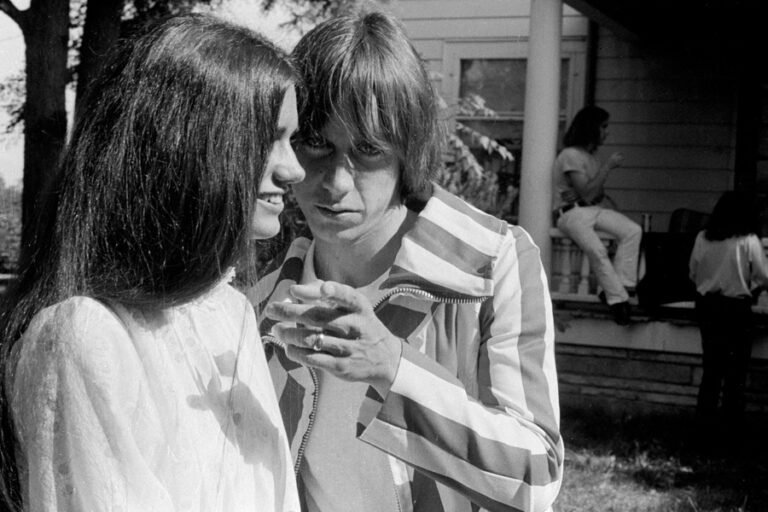
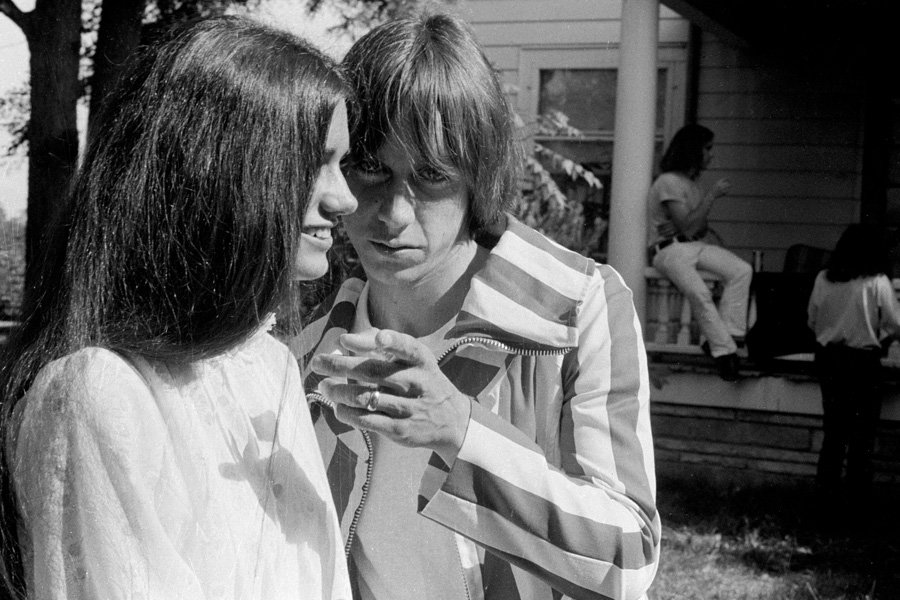
A single wedding photograph can act like a hinge between two eras. I look at such an image and see not only the couple but also the era in which they stood up together. Clothing, posture, the blur of background, the grain of film: all of that anchors a private moment inside a public timeline. For Wendy Weissberg, a contemporaneous image is the clearest piece of public evidence that ties her to a particular person and a particular time. Photographs are stubborn things. They resist being erased. Yet they also do not tell the full story. A picture shows a second. It does not reveal decades.
Paper trails that thin out
Records were once paper, folded and filed in courthouses, printed on local presses, tucked into boxes in basements. When someone lives most of their life outside the spotlight, those paper trails often stay local and analog. The result is not merely scarcity. It is a fragmentation that favors the loudest voices. I think about how quickly an entry in a county ledger can become invisible to a future researcher who only searches the web. That is part of why Wendy Weissberg’s public footprint seems to stop as soon as the marriage ends. The institutional processes that create records were not designed to make every life obvious to strangers decades later.
The legal blur: annulment or formal end
Legal language matters. Annulment and divorce are different in law and in what they claim about a relationship. Some accounts suggest Wendy Weissberg’s marriage was annulled after a short time. Others indicate a formal legal termination later in 1969. I do not claim certainty. What interests me is how both possibilities shape narrative. An annulment implies an attempt to erase. A divorce admits the relationship happened and then shows how it was formally dissolved. Either way, the legal record offers a different kind of clarity than the cultural record. Where the press compresses, court files expand; where the court is silent, the press speaks in rumor.
Shared names and mistaken identities
There are many people who share the name Wendy Weissberg in contemporary life. That multiplicity is ordinary. It is also a trap. It invites sloppy conflation, the assumption that any modern professional with the same name must be the person in a black and white photograph from 1968. I bring this up because I have watched good research get derailed by identical names and a hunger for narrative. Names are thin scaffolds. Without corroborating details, they do not carry identity across decades.
Methods I pursue when the record is thin
When I chase a story like this I follow a sequence of practical steps that privilege primary evidence. I search marriage registers that still live in county offices, then move to probate and divorce indexes. I read microfilm of local newspapers, the small announcements and court notices that rarely make it into national compilations. I knock on the door of local archives and ask the archivist what they have. I look for oral histories, for people who attended the same clubs, who worked at the same venues, who might remember a house party name or a band rehearsal. These steps take work and patience. They also require permission and respect. I never assume someone owes me their private history just because it touches a better known life.
The stubborn absence of family and fortune
Part of what fascinates me is not only what we find but what we do not. There are no widely published accounts of Wendy Weissberg’s later life, no family tree laid out in public, no net worth estimations, no career biography. That absence feels deliberate to me in some ways and accidental in others. Some people choose to live quietly. Some archives lose things. Either way, the absence raises ethical questions. What right do we have to reconstruct a private life? What value does a fuller picture add to a cultural history dominated by a single, louder career?
The cultural cost of selective memory
The story of modern music is often told as a line of brilliant figures, each larger than life. But culture is crowded. Every headline absorbs orbiting lives, and many of those lives are not recorded. Wendy Weissberg’s brief appearance reminds me that the history we inherit is selective. It is shaped by publicity, by institutional preservation, and by the choices of the people who were photographed and the people who took the photographs. To acknowledge someone who disappears from the record is to insist on a slightly wider frame, to account for the ordinary people who appeared at the edges of extraordinary lives.
Ethics of imagining
I am aware of the temptation to paint in the blanks. It is easy to build stories around scant facts because stories feel satisfying. Yet imagination must be balanced with restraint. I can imagine a young person marrying under the pressure of itinerant life in an emerging music scene. I can imagine a quick decision, a regret, a relief. But I do not present imagined scenes as truth. I allow myself to hold possibility and to be explicit about it. Speculation can illuminate, but it must never pretend to be documentation.
FAQ
Who is Wendy Weissberg?
Wendy Weissberg is the woman publicly identified as the first spouse of a musician who later became widely known. Her appearance in the public record is brief. She is visible in the context of a 1968 marriage and then slips from wide view.
When did she marry?
The marriage took place in 1968. That date is one of the durable facts that anchor her in time.
How long did the marriage last?
The union ended in 1969. The length of the marriage and the legal character of its ending are subjects of differing accounts.
Are there photos of the wedding?
Yes. A contemporaneous wedding photograph exists and functions as the clearest public trace of the couple together at that moment. A photograph does not reveal later choices, but it proves presence.
Is there public information about her later life?
There is no widely published record of her later career, public activities, or family life. The public footprint after the marriage is minimal.
Was the marriage annulled or formally ended by a legal proceeding?
Accounts vary. Some sources describe an annulment after a short time. Others point to a formal legal termination recorded in 1969. The difference between these possibilities is legally significant and narratively telling.
Is she the same person as contemporary professionals who share the name?
No verified public evidence links the person who was married in 1968 to contemporary professionals who share the same name. Shared names can create confusion, and caution is necessary when matching modern profiles to historical figures.