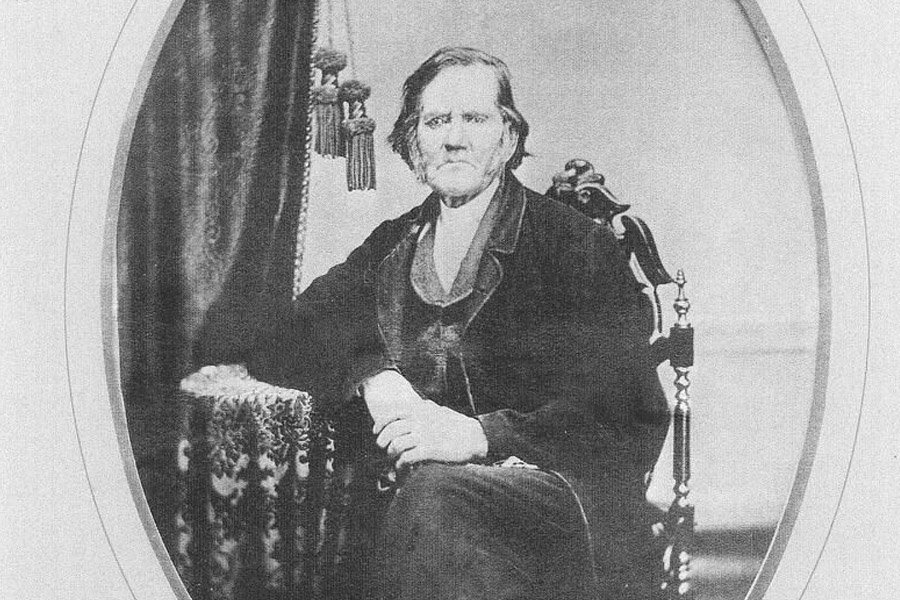
A life that spread farther than a name
Julius Ceylon Swift belongs to the kind of historical figure who is easy to overlook at first glance and difficult to ignore once the family tree opens up. He was not a senator, a general, or a man of public spectacle. He did not leave behind a trail of grand announcements or famous offices. Instead, his footprint widened in a quieter way, like water soaking into soil and moving far beyond the place where it first touched ground. His legacy lived in households, in naming patterns, in marriages, and in the long reach of descendants who carried pieces of him into new generations.
That kind of life can seem modest on paper. It is anything but modest in practice. Julius Ceylon Swift stood at the center of a family network that stretched across time like a web spun from sturdy thread. Born in the early years of the American republic, he saw a nation take shape around him while also building a family that multiplied outward with uncommon force. His story is not about one dramatic achievement. It is about accumulation, endurance, and the way one person can become the root system for many lives.
Born into old New England ground
Julius Ceylon Swift came into the world in Warren, Connecticut, in 1792, a period when the country was still learning how to stand upright. New England in that era was shaped by plain labor, religious discipline, family obligation, and the slow rhythm of seasons. A child born there inherited more than a surname. He inherited a moral climate, a memory of settlement, and a way of living that treated family as both shelter and structure.
His parents were Nathaniel Swift and Sarah Thomas, placing him inside a lineage already rooted in colonial New England. That background matters because it suggests continuity. Julius did not appear from nowhere. He rose from older lines, from families that had already learned how to endure winters, bury the dead, and raise children in crowded households where every hand mattered. In that world, a family was not an accessory to life. It was the frame around it.
The name itself carries a certain weight. Julius Ceylon Swift sounds formal, almost ceremonial, yet the man behind it seems to have lived with earthy practical force. He belonged to an age when names were often reused, repurposed, and turned into family markers. Those repeated names acted like pebbles dropped into a pond. They sent out circles that touched later generations.
Three marriages and a household that grew like a forest
The defining feature of Julius Ceylon Swift’s adult life was his family, and more specifically, the scale of it. He married three times, and each marriage became a separate branch of a much larger tree. Taken together, those unions produced a household so broad that it feels less like a single family and more like a small village joined by blood and memory.
His first wife was Betsey Salina Bates. Their marriage began in 1815, and from it came three children. Aner Delilah Swift, Cornelia Frances Swift, and Elizabeth Belinda Swift, often called Betsy, formed the first visible branch of the line. This first family cluster established a pattern that would repeat again and again: names that were elegant, deliberate, and deeply rooted in nineteenth-century naming customs. There is a kind of poetry in those names. They sound like doors opening in sequence.
The second marriage was to Laura Shove in 1822, and this union produced eight children. This branch expanded the family at a faster pace, almost like a river gathering speed as tributaries joined it. Lucy Jane Swift, Cornealius Thomas Swift, Susan Abia Swift, Homer Carlos Swift, Rufus Stedman Swift, Welcome Henry Swift, George Worthington Swift, and Laura Elizabeth Swift gave the line breadth and momentum. Each child added another path into the future. Each name carried the distinct texture of the era, at once formal and intimate.
His third wife was Lydia Hawkins, whom he married around 1840. This final marriage produced eleven children, and the scale of the household became astonishing. Sarah Felicia Swift, Hannah Rosette Swift, Charles Julius Swift, Julius Dallas Swift, Huldah Jeanette Swift, Sherman Hartwell Swift, Dean Nathaniel Swift, Chloe Elizabeth Swift, Salina Evelina Swift, Ceylon Lafayette Swift, and Capitola Cornelia Swift filled out the last great branch of the family. The list reads like a procession. It moves with the rhythm of bells in a large church, each name sounding and then giving way to the next.
Taken together, the children suggest a family life that was expansive, persistent, and full of human variation. There is a kind of architecture in it. Three marriages became three wings of the same house.
Names as memory, names as inheritance
One of the striking features of Julius Ceylon Swift’s family is the way names seem to carry memory forward. Some children were given names that echoed parents or grandparents. Others were given names that sound almost inventive, like choices made with care and hope. In families of this era, naming was not a random act. It was a form of storytelling. A name could honor a line, preserve a favorite relative, or signal aspiration.
That makes the Swift family especially interesting. The children do not feel interchangeable. They feel marked. Their names create texture and repetition, like a woven fabric with familiar patterns returning in different places. When a family grows this large, the names become coordinates. They help descendants trace where they came from and how the branches spread.
Among these branches, the line through Charles Julius Swift became especially important because it connected Julius to later generations that remained visible in historical and genealogical records. That kind of line matters because it shows how family history does not end with the lifetime of the original patriarch. It continues to travel, like a lit candle handed from room to room. The flame changes hands, but it remains lit.
A legacy built without public ceremony
Julius Ceylon Swift did not build a public career that has survived in major historical accounts. He is not remembered for legislation, military command, or business empire. Yet there are many kinds of influence, and some of the deepest are not recorded in public monuments. A person can shape the future by raising children who raise children, by creating household culture, by anchoring a family name, and by leaving behind a network of human connections that outlast him by generations.
That is the kind of influence Julius seems to have had. His legacy is less like a monument carved in stone and more like a foundation hidden beneath a house. It is not the first thing the eye sees, but everything rests on it. The great size of his family suggests a life lived in constant relation to others. In that sense, his biography is not narrow at all. It is crowded, layered, and alive with echoes.
There is also something historically revealing in that. The nineteenth century was an age of movement, expansion, and transformation. Families scattered. Surnames moved across state lines. Children took root in new places. A patriarch like Julius Ceylon Swift sat near the center of that motion, holding together one cluster long enough for it to spread. His life linked the early republic to the industrial age by way of the domestic world, which often leaves fewer records but far deeper traces.
Edinboro, Pennsylvania, and the long reach of time
Julius Ceylon Swift died in 1876 in Edinboro, Pennsylvania. That fact gives his life a wide arc. He was born in the era after the Revolution and died in the aftermath of the Civil War, having witnessed a nation that changed shape around him again and again. He lived long enough to see America move from a young experiment into a far more complicated country, full of roads, rail lines, social strain, and expanding horizons.
By the time he died, the family he had helped build had already become a living archive. Children, grandchildren, and later descendants carried his influence into new towns and new lives. Some stayed close to farming and local community life. Others moved into the records of later history. All of them extended the reach of the same original household.
What lingers most about Julius Ceylon Swift is not fame but scale. His life was long. His family was large. His line branched outward with the force of a tree whose roots ran deep enough to survive storms. He stands as an example of a nineteenth-century American life that may not have shaped the headlines, yet shaped something equally enduring, the human map of a family that continued to grow long after his own years had ended.
Building Search Visibility Without Chasing Magic Tricks
How Commercial Foundations Keep Buildings Standing Tall
Keeping Household Finances Afloat During Probate