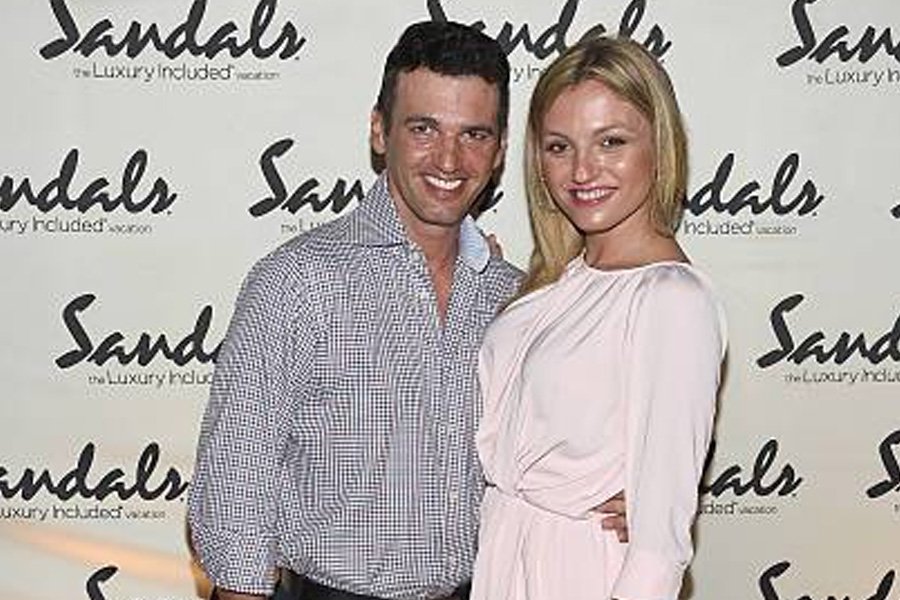
The kind of visibility that does not ask for attention
I keep coming back to the idea that some lives are not smaller because they are private. They are only harder to see. Lina Dovolani belongs to that category, the rare kind of public figure adjacent presence that reshapes a whole story without standing in the spotlight. In a culture that rewards volume, she seems to have chosen steadiness. In a world where every gesture is often turned into content, she has treated privacy like a working language.
That choice says more than silence ever could. It suggests discipline. It suggests boundaries. It suggests a person who understands that family life can be strongest when it is not constantly translated for outsiders. I read that not as absence, but as design. A well built house does not show every beam. It simply stands.
What interests me most is not the simple fact that Lina Dovolani is married to a famous dancer. It is the way her life seems to orbit a central principle of protection. There is a kind of intelligence in that. Not the flashy kind that seeks applause, but the practical kind that keeps a household moving, a schedule intact, and children grounded while the rest of the world keeps spinning.
Marriage, partnership, and the shape of shared work
A long marriage in the public eye is often discussed like a trophy, as if duration alone proves something. I think that misses the point. What matters more is the texture of the partnership. With Lina Dovolani, the interesting detail is how little drama seems attached to her role and how much structure seems to depend on it. That is not glamorous work, but it is essential work.
I imagine marriage in that setting as a kind of relay race. One person runs the stage, the camera, the rehearsal room, the public event. The other keeps the rhythm behind the curtain, making sure the handoff happens cleanly. If one side falters, the whole arrangement wobbles. That is why invisible labor matters. It is not decorative. It is load bearing.
What gives this marriage an unusual quality is the balance between public achievement and private continuity. The outer world sees one half of the equation more clearly. The inner world, where meals are planned, children are guided, worries are absorbed, and ordinary days are held together, belongs to Lina Dovolani. In that sense, she is not standing beside fame so much as helping it stay human.
Motherhood as an architecture of attention
The strongest thread in the story is motherhood. Family life is not presented as a background detail here. It is the centerline. That matters. I think many people underestimate how much skill it takes to manage a home with children who each require attention, direction, and emotional steadiness. It is less like juggling and more like conducting. The timing has to be right. The quiet moments matter. The crescendos matter too.
What I find compelling is the suggestion that Lina Dovolani’s parenting style is measured rather than performative. There is no need to turn every milestone into a public display. There is no pressure to make family into a brand. Instead, the emphasis seems to land on consistency, which is far more difficult to maintain and far more valuable to the people living inside it.
When a household includes a child with autism, that steadiness becomes even more important. It changes the daily rhythm. It changes how care is given, how routines are shaped, how successes are measured. In that setting, patience is not just a virtue. It is infrastructure. It supports the whole system. I do not see that as a sentimental idea. I see it as practical love, repeated every day until it becomes the atmosphere of the home.
Privacy as a deliberate public philosophy
There is a common mistake people make when they encounter someone who does not post much, speak much, or appear much. They assume the person has no story. Lina Dovolani proves the opposite. Sometimes the story is simply located elsewhere, in relationships rather than announcements, in obligations rather than branding, in the ongoing care that never becomes a headline.
I have always thought privacy can function like a garden wall. It does not exist to hide life completely. It exists to protect what grows inside. That feels especially relevant here. A low profile is not necessarily a retreat. It can be a choice about what should remain uncut, uncurated, and unquoted. In that way, Lina Dovolani’s relative invisibility becomes a statement of values.
There is also dignity in refusing to convert family into public theater. I respect that. Not everything meaningful should be made legible to strangers. Not every role requires applause. Some roles are most powerful when they stay close to the bone of daily life.
What a partner beside fame can teach us
I think Lina Dovolani represents a larger pattern that is often overlooked. Many people build the conditions that allow others to shine. They organize, absorb, anticipate, and repair. They are the calm hand on the wheel while someone else is in the lights. The world tends to celebrate the performance and forget the preparation. Yet preparation is where much of life actually happens.
That is why her story is worth reading carefully. It reminds me that a household is its own economy of effort. There are visible earnings and invisible investments. There are public wins and private sacrifices. There are people who become faces and people who become foundations. Lina Dovolani appears to belong to the second category, and I mean that as praise.
The metaphor that keeps returning to me is the foundation of a stage. Audiences look at the performer. They rarely think about the structure underneath, the engineering that keeps the floor steady, the unseen support that prevents collapse. But without that base, the performance fails. A life can be like that too. The part no one applauds may be the part that holds everything else in place.
The meaning of a low-profile life in a high-noise culture
We live in a time that often mistakes exposure for significance. The louder the presence, the more people assume it matters. Lina Dovolani cuts against that logic. Her significance seems tied to repetition, loyalty, and restraint. Those are not fashionable qualities, but they are durable ones. They are the kind that survive long after trends fade.
I think that is what makes her story resonate beyond celebrity family interest. It touches a broader question about how we value care. Do we only notice the person on the stage, or do we also notice the person who makes the stage possible? Do we only honor the visible role, or do we also honor the one that keeps the visible role from fraying at the edges?
For me, Lina Dovolani is a reminder that a quiet life can still be a deeply active life. It can be full of decision making, emotional labor, and constant calibration. It can be a form of leadership that never needs a title. It can be a steady pulse in the background of a more public beat.
FAQ
Who is Lina Dovolani in the public record?
Lina Dovolani is known primarily as the spouse of dancer Tony Dovolani and as the mother at the center of a family life that has remained largely private. Her public presence is limited, but that scarcity itself helps define her image.
Why does Lina Dovolani attract interest?
She attracts interest because she stands near a highly visible public career while keeping her own life guarded. That contrast makes people curious. Her privacy becomes part of the story.
Is Lina Dovolani a public personality in the usual sense?
Not really. She does not appear to have pursued celebrity in the usual sense. Her presence is more domestic and relational than promotional, which makes her stand out in a culture built on self exposure.
What role does family seem to play in her life?
Family appears to be central. The available picture suggests that her priorities are shaped around marriage, parenting, and the day to day management of home life, especially in a household that has had to balance public work with private needs.
Why does her story matter beyond celebrity interest?
Because it highlights an undervalued kind of strength. Lina Dovolani represents the people who make stability possible without asking for credit. That kind of life can look quiet from the outside, but it is often where the real work lives.
Choosing The Right Manager For Rentals And Homeowner Communities
Your First Virtual Doctor Visit Without The Digital Drama
What Happens Behind The Scenes In A Columbus Drunk Driving Case